
In a townhouse or condominium, a rodent problem does not always stay inside one room or even one unit. You can clear a cabinet, protect food, and still notice new damage because the route runs through a wall, ceiling space, or utility chase you cannot reach. My rodent control work in The Hammocks, FL focuses on understanding those connections before choosing a treatment. That matters when your next decision may involve a neighbor or property manager as well as your own home.
Homeowners deserve more than a technician who arrives, leaves a few devices, and describes every problem as an infestation. I want you to understand what can be established during an inspection and what still needs observation. That difference matters in The Hammocks, where a townhouse, condominium, and detached home may have very different access limits. Is the activity confined to one room? Can the suspected nesting space be reached safely? Will the proposed work affect shared building components? These decisions shape the recommended plan before equipment is placed. I also explain which areas should remain undisturbed during monitoring and what new evidence would change the recommendation. You should not have to guess what a service visit was meant to accomplish.
My name is Lawrence Butch Gagnon, owner of Proterra Pest Control. I have spent 24+ years working through problems inside South Florida buildings. Rodents are a good example of why symptoms and causes need separate attention. A noise at night might come from a roof rat moving through an attic. Small droppings beneath a sink could point to house mice using the spaces around plumbing. Neither observation tells the whole story by itself.
Rodent control is the process of identifying active rodents, reducing or removing the animals inside a structure, limiting their access to food and shelter, and correcting the openings that let them enter. It can involve traps, properly placed monitoring devices, exclusion materials, sanitation guidance, and follow up. The order depends on what the inspection shows. A successful visit should leave you understanding what was found and what still needs attention. I do not treat every scratching noise as a rat, and I do not assume that a rodent seen outdoors means the entire house is infested.
A mouse crossing the kitchen floor is an obvious warning. Other clues stay hidden until you move an appliance, open a cabinet, or enter the attic. These are the problems I want homeowners to describe when they call, even if they have not identified the species.
Footsteps after dark can signal animals moving through attic insulation or along framing. Roof rats climb readily, but sound alone cannot identify a species. I check for droppings, nesting material, rub marks, and damaged openings near the roofline. Those details help distinguish active rodent movement from another animal moving overhead.
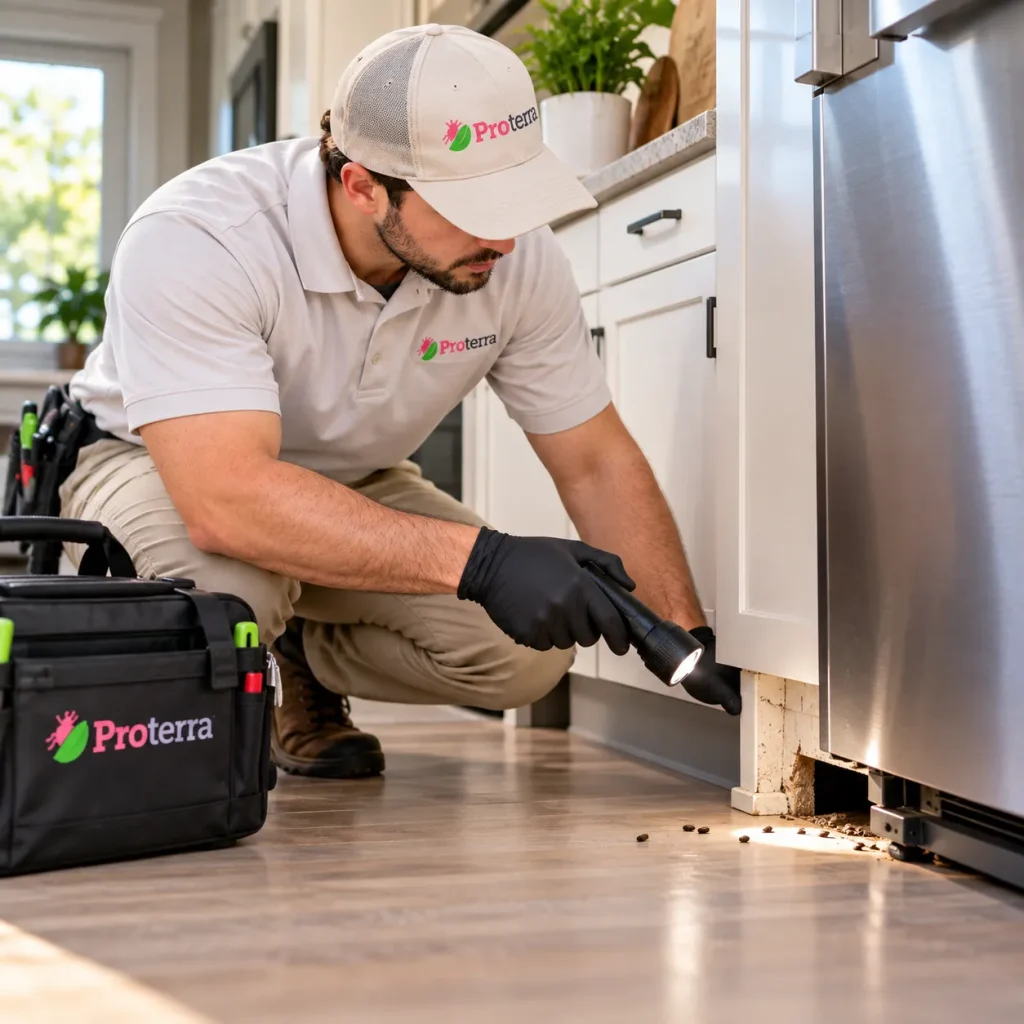
Tiny droppings near dry food, a dishwasher, or the space beneath a sink deserve attention even without a sighting. House mice can use very small openings around utility lines. I follow the evidence behind appliances and inside cabinets, then determine whether trapping and sealing can interrupt their established travel routes.
A cluttered garage offers cardboard, stored fabrics, pet food, and quiet corners. Rodents may gnaw packaging or nest behind shelving without entering living rooms. I examine the garage door sweep, side gaps, and openings around equipment before deciding where control devices belong and what storage changes will help afterward too.
Fruit left beneath trees, uncovered trash, and dense planting can support rodents outside. Seeing one near a patio does not prove an indoor infestation. I inspect the path between those outdoor resources and the house, including vegetation near the roof, fence lines, and wall penetrations that could allow direct access.
The Hammocks is not one uniform housing development. Around Hammocks Boulevard and the residential streets near SW 147th Avenue, the area includes detached houses, attached townhomes, and condominium buildings. The inspection changes with the building. A detached home may have an accessible roof perimeter. A townhouse can have adjoining walls and shared roof details. In a condo, a suspected source may sit outside the unit a resident controls.
The local setting adds another practical detail. Lakes, green spaces, palms, and landscaped courtyards are part of the community, but water itself is not proof of a rodent problem. What matters is whether vegetation touches a roof, food waste remains accessible, or an opening connects outdoor activity to indoor shelter. UF/IFAS guidance specifically identifies overhanging branches and untended palm growth as conditions that can assist rodent access.
South Florida rain and humidity can also change what homeowners notice. Wet weather may bring more attention to garages, storage rooms, and covered areas, but an increase in sightings does not tell me where an animal is nesting. The evidence at your property does.
I begin with your observations and the places where activity has been recorded. Then I examine accessible attic areas, kitchens, utility spaces, garage edges, roof details, and the exterior perimeter as relevant. I look for fresh signs rather than relying on a noise description or an old dropping alone.
Roof rats, Norway rats, and house mice behave differently. A climbing route along a branch is not the same as ground level travel near bins or a foundation. I use the pattern of marks, droppings, openings, and nesting evidence to select a sensible control approach.
Trapping is useful when rodents are already inside, but placements should be deliberate and accessible for checking. Any bait or exterior station needs a purpose, appropriate protection, and label-compliant handling. I explain what is proposed around pets, children, food storage, and the spaces you use every day.
Once the active animals are being addressed, exclusion work targets confirmed openings with suitable metal mesh, flashing, or other resistant materials where appropriate. I distinguish what Proterra can handle from repairs requiring a roofer, HVAC contractor, or association. Follow-up looks for fresh evidence, not just quiet nights.
I want you to understand the scope before you compare estimates. A rodent assessment should identify likely species, activity areas, possible access points, and the work required to reduce interior activity. Your proposal should distinguish trapping or other control measures from exclusion and any planned follow-up. Ask which openings are included and which cannot be reached without additional building work.
Extensive insulation removal, air duct remediation, roof rebuilding, and repairs to concealed plumbing are different scopes. They should not be silently treated as part of a standard rodent visit. If droppings are concentrated in insulation or an air handling system, the cleanup method and responsible contractor need to be agreed on separately.
The same applies to shared condominium areas. Treating one kitchen will not close a hole in a roof controlled by an association. I can identify where the suspected route leads, but permission and access may be needed before structural work can proceed. A clear boundary prevents confusion later.
Proterra has completed 16,500+ jobs across its service work. That experience has taught me to pay attention to what happens after the first visit. A trap without fresh activity may indicate progress, or simply that the rodents are avoiding its location. A sealed gap means little if another opening remains nearby. Neither result deserves an automatic guarantee.
I judge progress through changes in droppings, disturbance, sightings, and activity at monitored points. Homeowners should be able to ask what was observed, what was corrected, and what remains uncertain. I believe that is a stronger basis for confidence than a fixed promise made before the attic is even inspected.
If you discover droppings in a pantry or garage, do not dry sweep them or use an ordinary vacuum. The CDC advises wetting rodent waste with disinfectant before removal and using protective gloves. Large accumulations, contaminated insulation, or waste inside ventilation equipment call for additional precautions and may need specialist cleanup. Keep children and pets away from affected areas until they are addressed.
For prevention, store dry food and pet food in secure containers, empty garbage regularly, and pick up fallen fruit. Check whether tree limbs hang over the roof. Repair damaged door sweeps and report new gaps around utilities. A mouse can pass through a hole about the width of a pencil, so a small opening is not harmless. You do not have to diagnose every sign yourself. Take a photo of droppings or damage from a safe distance, remember where the noise occurs, and note when you first noticed it. That information makes the inspection more focused.
If scratching, droppings, or damage has raised concerns, tell me where you found the evidence and what type of property you live in. I can help determine the right inspection and discuss access to an attic, garage, or shared space before service is scheduled.
Call Proterra at 786-842-3824 to discuss rodent control in The Hammocks, FL.
New droppings, fresh gnaw marks, or continued trap activity suggest rodents remain. A week without new signs or captures is stronger evidence, provided entry routes are addressed.
Recurring rat activity often means an opening remains accessible or food and shelter are still available. Trapping removes animals, but exclusion and monitoring address repeated entry.
Rats can gnaw electrical insulation, creating damage that deserves prompt inspection. If wiring looks affected, have a qualified electrician assess it before using the circuit.
Rodents can move through connected voids and utility openings, so activity may extend beyond one residence. Shared structural repairs can require building management or association involvement.
Removing accessible food and water makes a property less attractive, but rats can remain where nesting shelter and other resources exist. Entry sealing and active removal may still be necessary.