
Scratching near the roof at dusk, dark pellets below an eave, or a bat circling inside can turn one sighting into a much bigger concern. Closing the first gap you notice can trap bats in the structure and push them toward living areas. Proterra approaches bat removal by finding the active roost, planning around wildlife rules, and closing the routes the colony could reuse.
Bats can leave through one narrow opening while several nearby gaps remain available. I look for body oil staining, guano below the roofline, sheltered voids, and activity around sunset. That field evidence separates an active exit from a harmless construction gap and prevents repairs from blocking bats inside the building.
A maternity colony may contain pups that cannot fly. State wildlife rules restrict exclusion from April 16 through August 14 unless a permit applies. I account for that window before recommending work. When exclusion cannot proceed, the immediate priority becomes keeping bats separated from occupied rooms until lawful work begins.
Bats remember a suitable roost and test nearby openings after their main route changes. Sealing one visible hole can simply move the activity to a soffit joint, roof vent, fascia return, or tile edge. A complete plan addresses the active opening and the secondary gaps that could become tomorrow's entrance. That is the real difference.
This work is not extermination. Bats are protected wildlife, and the accepted method for clearing a colony is exclusion. A one-way device lets bats leave to feed, then prevents them from returning.
I am Lawrence Butch Gagnon, owner of Proterra Pest Control. My 24+ years in the field taught me to confirm the animal, locate active exits, examine the full roofline, and fit each repair to the opening and surrounding surface.
An indoor bat calls for another response. Structural exclusion cannot replace medical guidance, rabies evaluation, or specialized waste cleanup after possible contact.
Bats reach attics through small construction gaps near ridge caps, soffits, fascia returns, vents, flashing, and loose roof tiles. They do not chew an opening like rodents. They use spaces that already exist. I trace staining, droppings, sound, and evening flight activity to find the exact route needing correction first.
Bats show strong loyalty to a proven roost. When one opening is blocked, they inspect the surrounding roofline, testing gaps that were never active before and following the same shelter cues that made the original site useful. I seal any remaining secondary routes before the one-way device comes down.
Guano collects below a regular roost or exit, while staining may come from repeated body contact and urine. Brazilian free-tailed bats can also leave a noticeable scent around established roosts. I identify the source, assess how far contamination extends, and explain whether separate cleanup or insulation work is needed.
A bat inside an occupied room needs a different response from attic activity. Keep people and pets well away, close interior doors, and never touch the bat barehanded. If contact may have occurred, preserve the option for testing and seek health guidance before anyone releases or disposes of the animal.
Warm, quiet voids give a maternity colony stable shelter. Barrel tiles, concrete block walls, ridge caps, soffit vents, shutter pockets, and stucco transitions can hide protected openings from anyone standing on the ground. A long insect season also makes a proven roost worth returning to.
Storm repairs add another complication. A shifted tile, lifted flashing edge, cracked vent screen, or unfinished seal can create a fresh route even when the roof appears sound. One sighting does not prove a colony.
I compare the building details, time of activity, droppings, and dusk movement so frog, bird, or rodent evidence is not mislabeled as bats.
I begin with the evidence. Droppings, rub marks, odor, sound, and the location of each sighting help distinguish bats from birds, rodents, and frogs. I also determine whether the call involves one accidental indoor visitor or an established colony using an attic, soffit, wall void, chimney, or hidden roof cavity.
Near sunset, active bats reveal where the structure opens into the roost. I watch the likely exits and compare that movement with the daytime inspection. On buildings with several roof sections, more than one viewing point or evening may be needed to map the colony's routes before anything is sealed.
Once the active exits are clear, I can close secondary openings without cutting off the colony's way out or redirecting bats toward occupied rooms. Each repair must fit the surface. Active routes stay open until a properly fitted one-way device is securely installed during the legally permitted exclusion.
The device lets bats leave but blocks their return. Regulations require it to remain for at least four nights forecast above 50 degrees, without rain or high winds. I check for activity and materials. Poor weather, an active entrance, or a failed attachment can extend the observation period before closure.
Good bat work includes knowing when to stop. I will not rush the final seal simply because the problem feels urgent. Poison, fumigation, relocation, and premature closure can produce odor, insect activity, frightened bats in occupied rooms, and an unlawful result.
Across more than 16,500 completed pest and wildlife jobs, I have learned to separate urgency from the correct next step before anyone starts exterior work or makes a promise the calendar cannot support. The findings, limits, and next action should be clear.
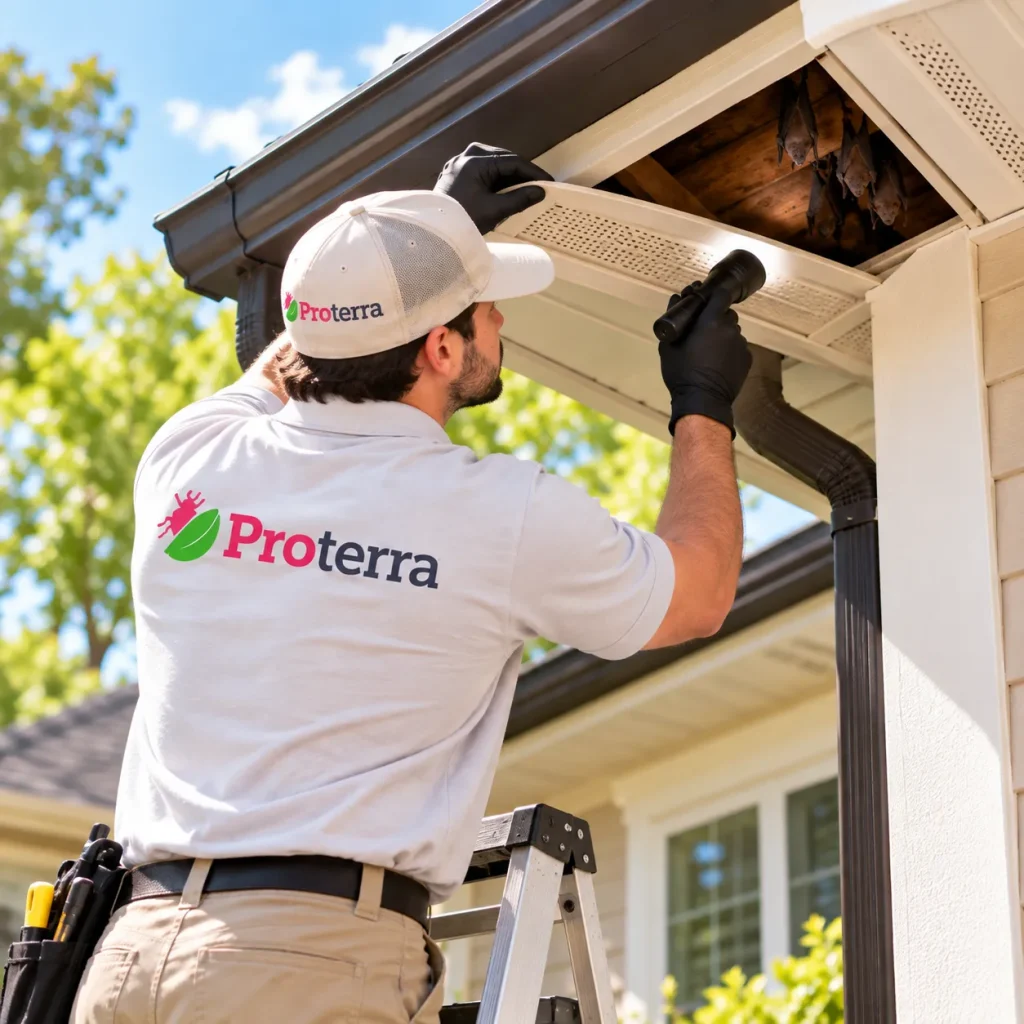
A bat exterminator should not kill or poison bats. Legal bat control uses one-way exclusion devices and structural sealing to move the colony out without harming it.
Bat removal services can handle several exits, but each route must be mapped. Secondary gaps are sealed first while monitored devices remain on active openings until activity stops.
Effective bat control prevents seasonal return by sealing every usable route after the colony exits. Closing only the main hole leaves nearby construction gaps available.
Guano cleanup is not automatically part of every exclusion. Its need depends on accumulation, moisture, insulation contamination, access, odor sources, and the risk of disturbing dust.
Ask which openings are active, how alternate gaps will be sealed, whether the calendar allows exclusion, how long devices remain, and what cleanup the proposal includes.
If you see bats leaving the roofline, find guano below an opening, or hear movement near dusk, schedule a bat assessment. I will identify the situation, explain the legal options, and outline the next practical step without treating a protected animal like an ordinary household pest.