
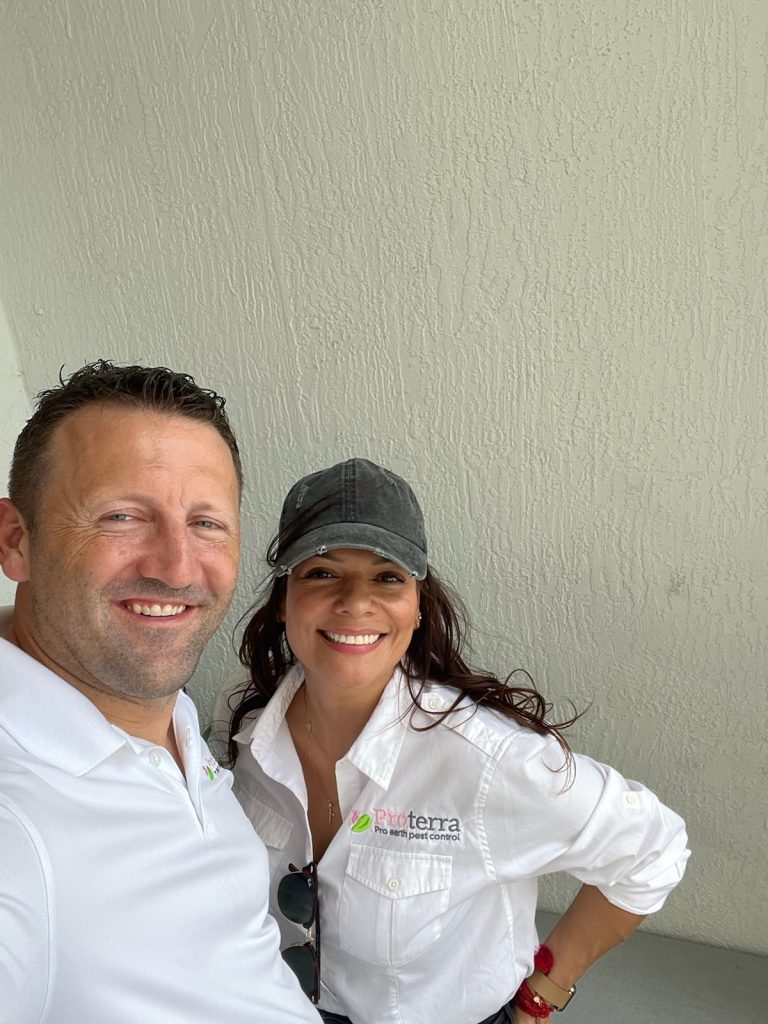
If you’re catching rodents but more keep appearing, the entry points are still open. That’s the cycle. It doesn’t stop until every entry point is physically sealed. Across more than 16,500 rodent removal and exclusion jobs from Homestead to the broader South Florida region, the pattern holds: traps catch rodents, but exclusion stops the population from rebuilding. I am Lawrence Butch Gagnon, and that distinction is what my rodent control program is built on.
Rodent control is not a single treatment. It’s a process that starts with finding where rodents are entering, moves through eliminating the population inside, and ends with sealing the structure so the cycle does not repeat.
The two most common species in South Florida are the roof rat (Rattus rattus) and the Norway rat (Rattus norvegicus). Roof rats dominate in residential neighborhoods. They’re arboreal and enter from above through ridge caps, soffit vents, AC chases, and utility penetrations. Norway rats are burrowers that stay closer to the ground, appearing more often near commercial dumpsters and water sources.
I have been doing this work for 24 years. A rodent control job that only involves trapping is incomplete. The animal is gone. The opening is still there. The next generation walks in within three weeks through the same gap. That is why exclusion matters. Exclusion is the physical sealing of every entry point with materials rodents cannot chew through. Get that right and you get a permanent solution.
Trapping removes the animals. It does not address the structural gaps they used to enter. New rodents from the property perimeter find those same openings within weeks, walk in, and the infestation starts over. The calls resume.
I use galvanized steel mesh and stainless steel wool for structural penetrations, not foam alone. Foam shrinks through summer heat cycles and reopens gaps within a season. The materials I use are rated specifically to hold.
I inspect the roofline, the attic void, and the full exterior perimeter. The gap that matters is typically at the fascia and soffit junction, at a deteriorated plumbing boot, or at a utility penetration. That is where I look first, and it is where most inspections do not reach.
In South Florida’s residential neighborhoods, three out of four rodent removal calls I inspect have had a previous company out. Traps were set, rodents were caught, and the problem came back within weeks. In nearly every case, the fascia board junction, the plumbing boot on the roof, or the utility chase was never sealed.
I have not had a reentry callback on a completed exclusion job in over three years. That record comes from doing the inspection correctly the first time and using materials that do not fail in subtropical heat. If an opening is there, I find it. That is the part most companies skip.
Roof rats move in groups along fixed travel paths. One noise source in the ceiling almost always means a colony has established a run overhead. Nesting begins before most homeowners hear anything noticeable. Inspection maps every run, the travel paths they use, and the entry points that feed the population.
Roof rats (Rattus rattus) are not attracted by garbage or dirty kitchens. They are arboreal climbers that travel overhead through palm trees, utility lines, and rooftops searching for harborage. Your attic is an ideal nesting space regardless of sanitation. The entry point is almost always on the roofline, not the floor.
Tamper-resistant bait stations go on the exterior along the fence line, near the foundation, and at any trees growing close to the roofline. They reduce the outdoor rodent population before entry attempts occur. This does not replace exclusion. Stations work as an ongoing perimeter monitoring and pressure reduction layer.
Roof rats chew through electrical wiring, which is a fire hazard most homeowners discover only during a home renovation, not during the active infestation. They also shred attic insulation for nesting, contaminate it with urine and droppings, and reduce insulation performance significantly. Replacing damaged insulation after rodent removal is common.
Trapping alone removes individual rodents. It does not stop the next generation from using the same entry point. Exclusion fills every gap, crack, and penetration with materials rodents cannot chew through. Once the structure is properly sealed and the interior population is eliminated, the infestation does not rebuild from outside.
I start on the roof. Roof rats enter from above, so that is where I begin. Ridge caps, soffit vents, AC chases, and utility penetrations are my primary focus. I document every opening by size and location before placing a single trap.
Droppings, gnaw marks, and grease trails on travel paths tell me which species is active and how many. Roof rat droppings are narrow with pointed ends, 12 to 14 millimeters long.
I set mechanical traps along confirmed travel paths, not randomly. Placement height, bait, and spacing are calibrated to the species. I return within three to seven days to check activity, clear catches, and reset each trap. Trapping continues until zero catches over two consecutive visits.
With the interior population confirmed eliminated, I seal every documented entry point. Soffit vent gaps get galvanized steel mesh. Utility penetrations get stainless steel wool before foam. Roof boot gaps get sheet metal collars. Nothing goes back to caulk only.
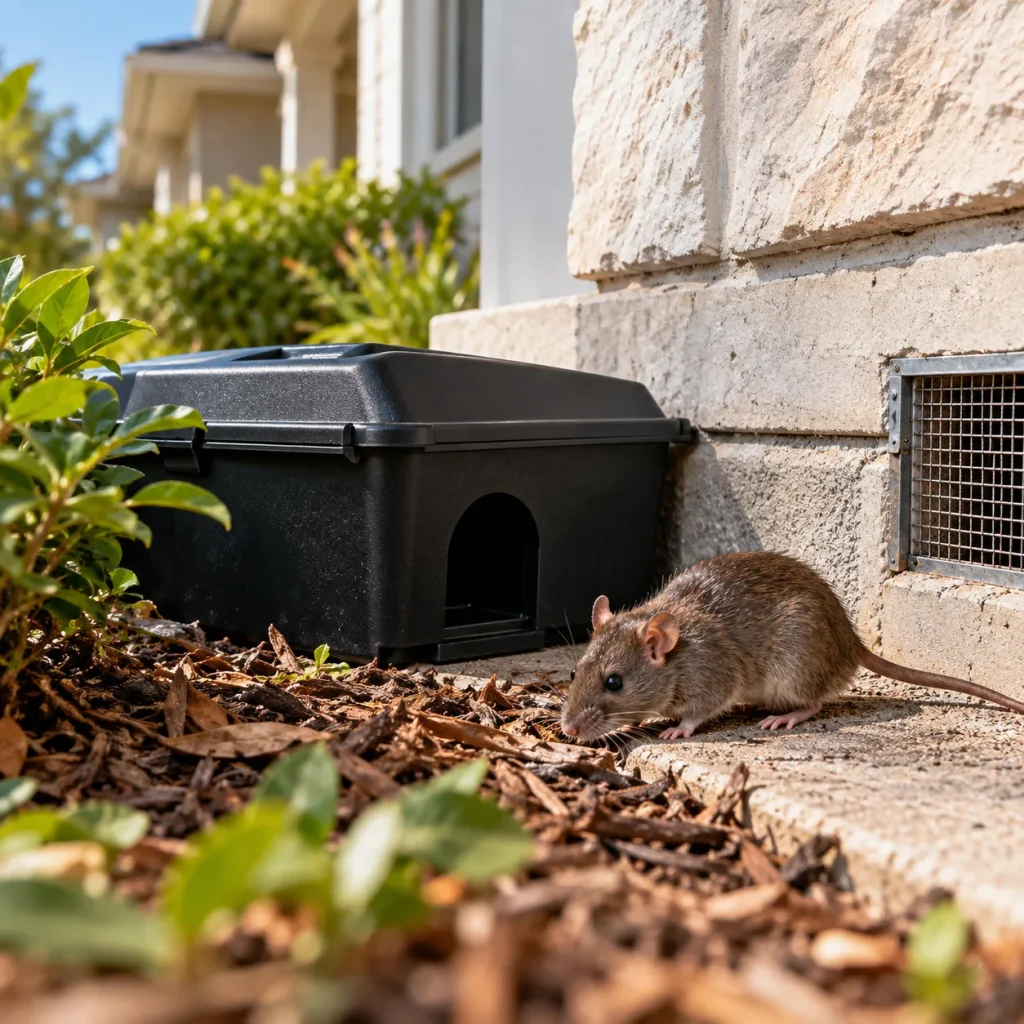
Rodent control combines inspection, mechanical trapping, structural exclusion, and perimeter station placement. The goal is to eliminate the active population and seal every entry point to stop new rodents from entering.
Trapping shows results in the first week. The full program, including exclusion to seal entry points, takes three to five weeks from initial inspection to a confirmed clear structure.
DIY trapping catches rodents but leaves entry points open. New rodents enter through the same gaps. Professional exclusion seals every structural opening, which is what stops the population from rebuilding.
Untreated infestations grow fast. Roof rats chew wiring and create fire risks. A breeding pair produces 40 offspring annually. Contaminated insulation and structural gaps multiply repair costs every month.
South Florida has no winter to slow rodent activity. Subtropical heat and humidity mean rodents breed continuously. After exclusion, quarterly perimeter monitoring catches new pressure before it becomes another infestation.
One call starts the inspection. I’ll tell you within the first 30 minutes whether you’re dealing with an active population inside the structure or perimeter pressure from outside. My rodent control services cover both scenarios. Either answer tells you what to do next. Call or text ProTerra to schedule.