
When pests keep returning, the problem is rarely limited to the insect or animal you can see. Ants may be nesting behind a wall. Roof rats may be using a soffit gap. Roaches may be following moisture around plumbing. I provide pest control in Kendale Lakes, FL, with the goal of finding the source, treating the active problem and reducing the conditions that let it return. The first step is a careful inspection.
A fast spray can knock down visible activity, but it does not explain why the problem started. I look at where pests are feeding, hiding, nesting and entering. That means checking roof lines and attic areas. I also check wall penetrations, door gaps, plumbing routes, landscaping and other places that can support pest activity.
My approach changes with the pest. A roof rat problem may need trapping and structural exclusion. An ant problem may require colony-focused baiting rather than spraying the ants you see. Spider activity often points to a steady supply of prey insects. The treatment should match the reason the pest is there.
Kendale Lakes includes houses, townhomes and apartment communities. Miami Dade planning records describe the area as a 1970 era development built around lakes and waterways with varied residential property types. That mix can create very different access points and pest pressures from one address to the next.
Scratching after dark, droppings near stored food, or gnaw marks around the attic can point to rodent activity. I inspect roof lines, soffits, vents, utility openings, and interior signs to find how rodents are moving. Trapping removes active animals. Exclusion work closes the openings that keep inviting them inside again.
Ant trails in kitchens and bathrooms often return after surface sprays because the colony is still active. I identify ants, follow where activity is strongest, and choose treatment around nesting behavior. Baits and targeted applications can reach visible workers. Moisture and entry routes are addressed when they support recurring activity.
Repeated webs around patios, garages, eaves, and windows usually mean spiders have steady access to prey. I inspect the places where webs rebuild and look for insect activity nearby. Treatment can reduce spiders, remove webbing, and address conditions that keep attracting insects. That gives the service a longer useful life.
Noises in the attic, movement near roof openings, or animals nesting around a structure need identification before removal starts. I check access points, nesting areas, and signs behind. The plan depends on the species. Removal and exclusion are handled together so the same opening does not create another problem later.
Pest problems become expensive when the visible signs are treated while the source stays untouched. A rat removed from an attic can be replaced if the roof gap stays open. Ant workers can disappear for a day while the colony remains active. Roaches can keep returning when moisture and hiding areas are left alone.
That is why I focus on inspection findings you can understand. I explain what I found, where I found it and why it matters before the work moves forward. UF IFAS recommends choosing pest management professionals who help determine how pests became a problem and provide prevention guidance after treatment. That problem-solving approach is the standard I work from.
I start by looking for signs that tell me what is active and where it is coming from. That includes droppings, rub marks, trails, webs, nests, moisture, damaged materials and entry gaps. In attached housing or apartments, shared walls and plumbing routes can also matter because pests can move between connected spaces.
The next step is finding what gives the pest food, water, shelter or access. Moisture, gaps around doors and windows, vegetation touching structures and yard debris can support pest entry or harborage. Fixing those conditions makes treatment more useful and helps reduce repeat activity.
Once I know the pest and the source, I choose the method that fits the problem. That can involve traps, baits, targeted applications, perimeter treatment or exclusion work. I do not use the same plan for every property. A colony of insects, a roof rat and a spider problem require different decisions.
After treatment, the important question is whether the source has changed. I look at the entry points, nesting areas, trails or other signs that mattered during the first inspection. If a problem is tied to moisture, vegetation, food storage or a structural gap, I explain what needs attention to reduce another cycle.
If you are seeing repeated ants, hearing movement in the attic, finding droppings, rebuilding spider webs or dealing with wildlife around the structure, schedule an inspection with Proterra Pest Control. Tell me what you are seeing and where it is happening. I will start with the source and explain the next practical step.
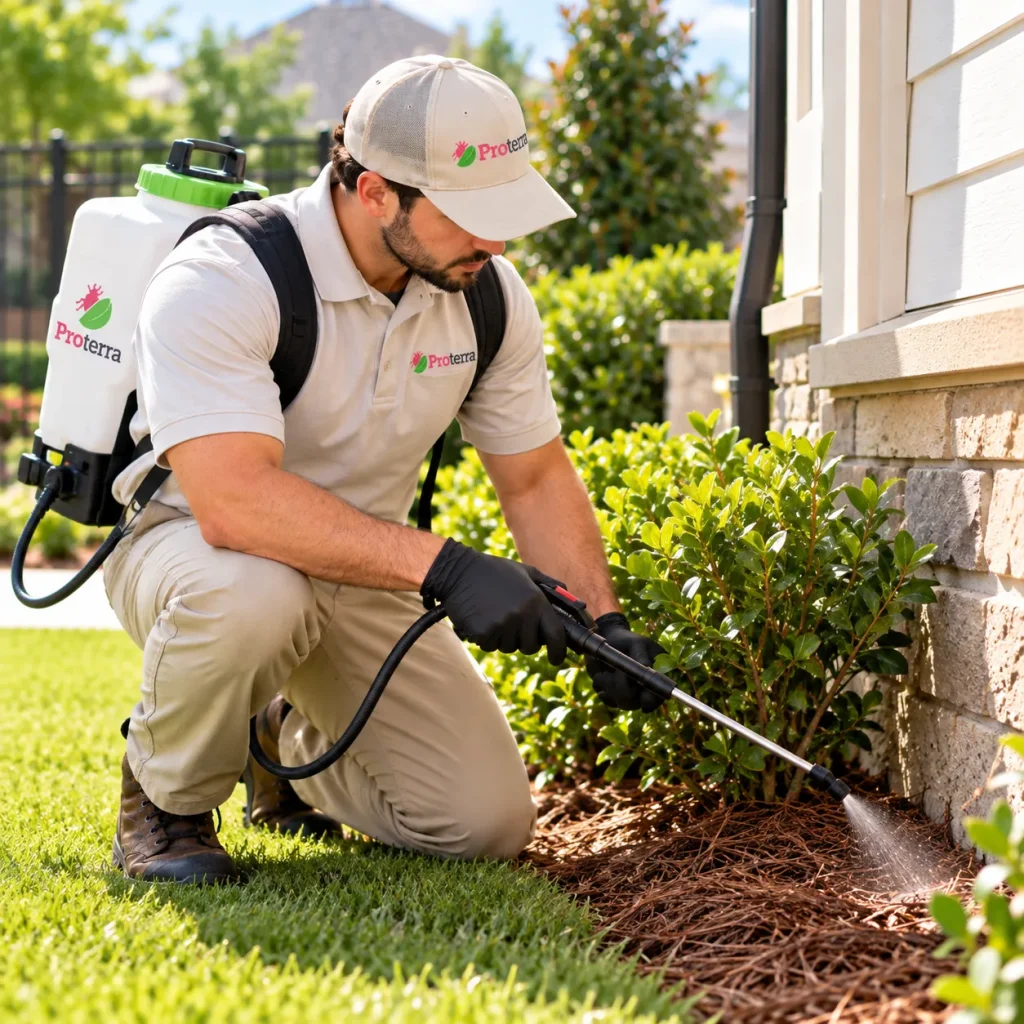
Pest control starts with inspection and pest identification. Treatment may include baits, traps, targeted applications, exclusion, web removal, and practical prevention steps based on what is found.
Pricing depends on the pest, property size, infestation level, treatment method, and follow up needs. An inspection is the best way to define scope before giving a reliable price.
Small isolated problems may respond to basic prevention or labeled products. Recurring ants, cockroaches, rodents, or wildlife usually need identification, source control, and a property inspection.
Active infestations can spread into new areas, contaminate food, damage materials, or increase nesting activity. Early inspection makes the source easier to identify and address.
Service frequency depends on pest pressure, property conditions, and infestation history. Homes with recurring activity may need ongoing monitoring, while isolated problems may require targeted treatment only.